Comparing User Behavior in Real vs. Virtual Supermarket Shelves: An Eye-Tracking Study Using Tobii 3 Pro and Meta Quest Pro
career value
219K/year
🤖 AI Summary
This study investigates the ecological validity of virtual supermarkets in replicating real-world shopping behavior, focusing on cross-environmental differences in visual attention. Using synchronized eye-tracking—Tobii Pro Glasses 3 in a physical supermarket and Meta Quest Pro in a matched VR environment—we quantitatively compared attention allocation and choice strategies under standardized shelf layouts and controlled food stimuli (healthful vs. delicious items). Results reveal systematic attentional discrepancies: in reality, participants significantly favored lower shelves—especially for healthful products—whereas in VR, attention was concentrated at eye-level and biased toward delicious items; sweet foods attracted comparatively low attention in both settings. This work presents the first cross-platform, concurrent eye-tracking validation of real-virtual supermarket paradigms. It demonstrates that while VR can effectively simulate certain core shopping behaviors, it introduces consistent attentional biases—providing critical empirical evidence for evaluating the ecological validity of virtual consumer research.
Application Category
📝 Abstract
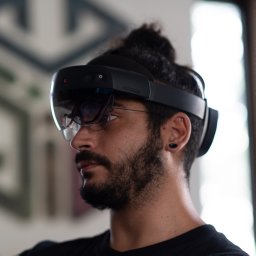
This study compares user behavior between real and virtual supermarket shelves using eye tracking technology to assess behavior in both environments. A sample of 29 participants was randomly assigned to two conditions: a real world supermarket shelf with Tobii eye tracking and a virtual shelf using the Meta Quest Pro eye tracker. In both scenarios, participants were asked to select three packs of cereals belonging to specific categories, healthy or tasty. The aim was to explore whether virtual environments could realistically replicate real world experiences, particularly regarding consumer behavior. By analyzing eye tracking data, the study examined how attention and product selection strategies varied between real and virtual conditions. Results showed that participants' attention differed across product types and shopping environments. Consumers focused more on lower shelves in real settings, especially when looking for healthy products. In VR, attention shifted to eye level shelves, particularly for tasty items, aligning with optimal product placement strategies in supermarkets. Overall, sweet products received less visual attention across both settings.
Problem
Research questions and friction points this paper is trying to address.
Compares user behavior in real versus virtual supermarket environments
Examines attention differences using eye tracking technology
Assesses virtual reality replication of real consumer experiences
Innovation
Methods, ideas, or system contributions that make the work stand out.
Used Tobii and Meta Quest eye tracking
Compared real and virtual supermarket shelves
Analyzed attention shifts between product types
🔎 Similar Papers
No similar papers found.
💼 Related Jobs