🤖 AI Summary
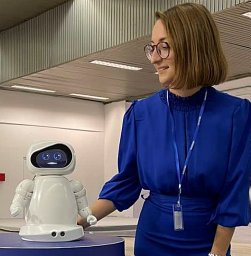
This study investigates how humor style, topic type, and language preference jointly influence users’ perceptions of funniness and appropriateness of AI-generated jokes delivered by a robot in group settings. Conducted in an authentic human–robot interaction classroom environment, the research employs a mixed-factorial experimental design, utilizing large language models to generate four humor styles—including aggressive and affiliative—and two topic categories (person-focused vs. political). User perceptions were assessed via structured questionnaires. This work represents the first empirical integration of humor style, topic, and bilingual preference within HRI research, revealing that aggressive and affiliative humor are perceived as significantly funnier, person-focused topics are deemed more appropriate, and language preference is modulated by content type, linguistic proficiency, and individual differences in humor engagement.
📝 Abstract
Humor plays a central role in human social relationships, and recent advances in computational humor create new opportunities for integrating humor into human-robot interaction (HRI). While large language models (LLMs) can generate diverse forms of humor, it remains unclear how humor style, joke content, and language preference shape perceptions of robot-delivered humor in group settings. In this exploratory study, we employed a mixed factorial design in which participants evaluated AI-generated jokes delivered by a robot in a university classroom. We examined the effects of humor type (Affiliative, Self-Enhancing, Aggressive, Self-Defeating) and joke content (person-related vs. political) on perceived funniness and appropriateness, as well as preferred language. Results show that humor type significantly influences funniness, with Aggressive and Affiliative humor rated higher, while joke content primarily affects appropriateness, with person-related jokes preferred over political ones. Language preference was shaped by both joke content and participants' self-reported fluency and humor practices.