Scholar
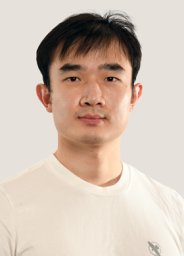
Jiazhen Pan
Google Scholar ID: 3ajAndQAAAAJ
Technical University of Munich
Citations & Impact
Citations
564
H-index
13
i10-index
17
Publications
20
Co-authors
14
list available
Publications
Resume
Academic Achievements
- 2025: Paper 'Ask Patient with Patience' accepted at EMNLP.
- 2025: Released DAS Medical Red-Teaming, a dynamic framework for auditing medical LLMs.
- 2025: Cardiac MR Foundation Models paper accepted at Medical Image Analysis.
- 2025: MedVLM-R1 reasoning model accepted early at MICCAI 2025 (top 9% of submissions).
- 2024: Whole Heart 3D+T Representation Learning paper accepted early at MICCAI 2024 with oral presentation invitation.
- 2024: Review paper on Mamba accepted at WBIR 2024 with oral presentation.
- 2024: Two papers on reconstruction-driven motion estimation and registration in undersampled MRI accepted at IEEE TMI.
- 2024: Paper on direct cardiac segmentation from undersampled k-space using Transformers accepted at IEEE ISBI 2024.
- 2023: Paper on unrolled and rapid motion-compensated reconstruction for cardiac CINE MRI accepted at Medical Image Analysis.
- 2023: Three papers accepted at MICCAI 2023.
- 2023: Paper on Neural Implicit k-Space accepted at IPMI 2023.
- 2022: Learning-based motion-compensated reconstruction paper accepted early (top 10%) at MICCAI 2022.
- 2022: Awarded Magna Cum Laude (top 3%) at ISMRM 2022.
- 2022: Finalist for Young Scientist Award at MICCAI 2022.
Background
- Project-leading postdoctoral researcher in AI in Medicine at the Technical University of Munich and AI in Medicine Lab.
- Collaborates with Daniel Rueckert and Benedikt Wiestler.
- Research mission focuses on leveraging AI expertise to address foundational healthcare challenges and ensuring safe, reliable, and ethical deployment of LLMs/VLMs in high-stakes clinical settings.
- Leads a research thrust on AI trustworthiness and supervises multiple Ph.D. students.
- Research spans two pillars: (1) Trustworthy Medical AI: developing adversarial attacks and red-teaming audit frameworks to evaluate and enhance large AI model reasoning; (2) Advanced Medical Imaging: applying representation learning and generative models to accelerated MR reconstruction, 3D/4D volume reconstruction, image analysis, and diagnosis.