Scholar
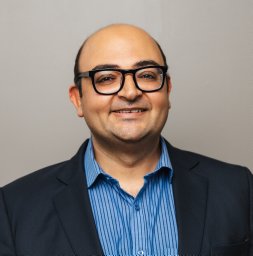
Faisal Mahmood
Google Scholar ID: 9MsdbKoAAAAJ
Associate Professor, Harvard University
Citations & Impact
Citations
13,197
H-index
45
i10-index
70
Publications
20
Co-authors
0
Publications
Resume
Academic Achievements
- Developed pathology foundation models UNI (published in Nature Medicine) and CONCH (published in Nature Medicine).
- Created PathChat, a generative AI chatbot/multimodal large language model for human pathology (published in Nature).
- PathChat DX, the clinical-grade version of PathChat, received FDA Breakthrough Device Designation—among the first generative AI tools in pathology to do so.
- Introduced KRONOS, a foundation model for spatial proteomics.
- Proposed VORTEX, an AI-driven 3D spatial transcriptomics method.
- Released open-source libraries TRIDENT (for large-scale WSI batch processing) and Patho-Bench (for foundation model benchmarking).
- Proposed THREADS, a molecular-driven foundation model for pathology.
- Published a paper on transferability of MIL models at ICML 2025.
- Published a commentary on benchmarking in machine learning for biomedicine in Nature Medicine.
- PhD student Cristina Almagro-Pérez awarded the prestigious Rafael del Pino Foundation Fellowship.
Background
- Develops machine learning, data fusion, and medical image analysis methods for objective diagnosis, prognosis, and biomarker discovery.
- Focuses on using AI as an assistive tool for pathologists to reduce interobserver and intraobserver variability in cancer diagnosis.
- Develops novel algorithms to identify clinically relevant morphologic phenotypes and biomarkers associated with response to specific therapeutics.
- Builds multimodal fusion algorithms integrating imaging modalities, patient/family histories, and multi-omics data for precise diagnostic, prognostic, and therapeutic decisions.
- Affiliated with the Harvard Data Science Initiative, Harvard Bioinformatics and Integrative Genomics (BIG) program, Dana-Farber Cancer Institute’s Cancer Data Science Program, and the Cancer Program at the Broad Institute of Harvard and MIT.