Scholar
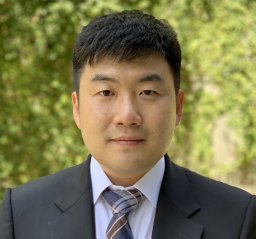
Hong-Ye Hu (扈鸿业)
Google Scholar ID: Hqf3jOUAAAAJ
HQI Fellow, Harvard Quantum Initiative, Harvard University
Citations & Impact
Citations
908
H-index
16
i10-index
21
Publications
20
Co-authors
19
list available
Resume
Academic Achievements
- Fellow of the Harvard Quantum Initiative
- Nominee for UC President’s Dissertation Year Fellowship (Physics Department, 2021)
- Chair's Challenge Award recipient, UCSD Physics Department (2018)
- Weiming Scholar, Peking University (2013–2016)
- Beijing City College Graduate Excellence Award, Ministry of Education (2016)
- Gold Medal, China Undergraduate Physics Tournament, as a member of Peking University team (2013)
- Active reviewer for journals including Nature Communications, npj Quantum Information, Physical Review X Quantum, Physical Review Letters, Quantum, etc.
Education
- Peking University, 2013–2016, awarded 'Weiming Scholar'
- Received Beijing City College Graduate Excellence Award from the Ministry of Education in 2016
- Ph.D. from UC San Diego Department of Physics (inferred from honors)
- Nominated by UCSD Physics Department for UC President’s Dissertation Year Fellowship in 2021
- Recipient of Chair's Challenge Award, UCSD Physics Department, in 2018
Background
- Currently a Research Fellow at the Harvard Quantum Initiative (HQI)
- Specializes in the intersection of quantum information theory, quantum control, and machine learning
- Collaborates closely with experimental groups working on neutral atom tweezer arrays, optical lattices, and superconducting qubits
- Aims to advance quantum science through precise atom control, machine learning, and engineered innovation
- Research interests include: analog and digital quantum simulation; quantum statistical learning (e.g., Hamiltonian learning, device benchmarking, quantum state learning); quantum optimal control; and machine learning for quantum information science (e.g., automated QEC code design and efficient decoders)