Scholar
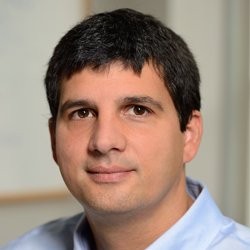
Tamás Budavári
Google Scholar ID: VoyeryMAAAAJ
Dept. of Applied Mathematics and Statistics, Johns Hopkins University
Citations & Impact
Citations
10,488
H-index
40
i10-index
75
Publications
20
Co-authors
60
list available
Publications
Resume
Academic Achievements
- He has made significant contributions to computational astronomy, including advances in photometric redshift estimation and the development of SkyQuery, an online query tool that combines large volumes of data from separate telescopes. He also pioneered new methodologies to streamline queries of large astronomy catalogs and simulations, such as the Sloan Digital Sky Survey, the Galaxy Evolution Explorer, Hubble Legacy Archive, and Millennium Simulation. He is a member of the American Statistical Association, Society of the Hungarian Academy of Sciences, and the American Astronomical Society. He was a recipient of the Gordon and Betty Moore Fellowship, Hungarian National Graduate Fellowship, and was a Research Fellow at the Statistical and Applied Mathematical Sciences Institute (SAMSI) in 2012. His research has been funded by the National Science Foundation, Virtual Astronomical Observatory, Space Telescope Science Institute, Alfred P. Sloan Foundation, U.S. Department of Defense, Army Research Office, and the National Institutes of Health.
Research Experience
- He joined Johns Hopkins as a postdoctoral research fellow in 2001 and became an associate professor in the Department of Applied Mathematics and Statistics. His work centers on the computational and statistical challenges of big data, such as understanding the dynamics of vacant housing in Baltimore City, extracting high-resolution images of stars in the night sky using repeated exposures, and crossmatching astronomy catalogs.
Education
- He earned a master’s degree in theoretical physics from Eötvös Loránd University in Budapest in 1997 and a PhD in astrophysics from the same university in 2001.
Background
- His research interests include computational statistics, Bayesian inference, low-dimensional embeddings, streaming algorithms, parallel processing on GPUs, scientific databases, and survey astronomy. He focuses on the intersection of observational astronomy and statistics, particularly in large-scale structure, cosmology, and galaxy evolution.
Miscellany
- He is a founding editor of the Journal of Astronomy and Computing.