Scholar
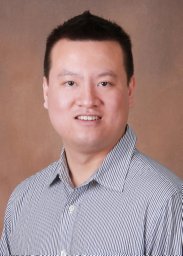
Hau Chan
Google Scholar ID: R1w52RIAAAAJ
Assistant Professor, University of Nebraska-Lincoln
Citations & Impact
Citations
1,139
H-index
18
i10-index
28
Publications
20
Co-authors
31
list available
Publications
Resume
Academic Achievements
- Early Career Spotlight, 31st International Joint Conference on Artificial Intelligence (IJCAI 2022)
- Distinguished SPC Member, 31st International Joint Conference on Artificial Intelligence (IJCAI 2022)
- Outstanding PC Member, 15th ACM International WSDM Conference (WSDM 2022)
- Best Student Research Paper Award, 15th Autonomous Agents and Multiagent Systems (AAMAS 2016)
- Best Research Paper Award, 2015 SIAM International Conference on Data Mining (SDM 2015)
- National Science Foundation Graduate Research Fellowship, 2012 - 2015
Research Experience
- 2018 - Current: Assistant Professor, University of Nebraska-Lincoln
- 2017 - 2018: Postdoctoral Fellow, Laboratory for Innovation Science at Harvard (Advisors: David Parkes and Karim Lakhani)
- 2017 May - August: Postdoctoral Fellow, USC Center for Artificial Intelligence in Society (Advisors: Milind Tambe and Eric Rice)
- 2015 - 2017: Postdoctoral Research Associate, Trinity University (Advisor: Albert Jiang)
Education
- 2010 - 2015: Ph.D. Candidate in Computer Science, Stony Brook University (Advisor: Luis Ortiz)
- 2006 - 2010: B.S. Candidate in Computer Science and Mathematics, College of Charleston (Advisor: Dinesh Sarvate)
Background
- Research Interests: Artificial Intelligence (AI), AI for Society and Social Good, Game Theory, Mechanism Design, Machine Learning. Main research area lies in multi-agent aspects of AI for Society and Social Good, focusing on developing modeling and algorithmic foundations for tackling societal problems and predicting agent behavior in societal contexts, leveraging AI, game theory, mechanism design, and machine learning to better inform policymaking and collective decision-making.
Miscellany
- Currently leading the Computational Decision Science (CDS) Lab.